

Were the Highlands ever colonised? And other stupid questions
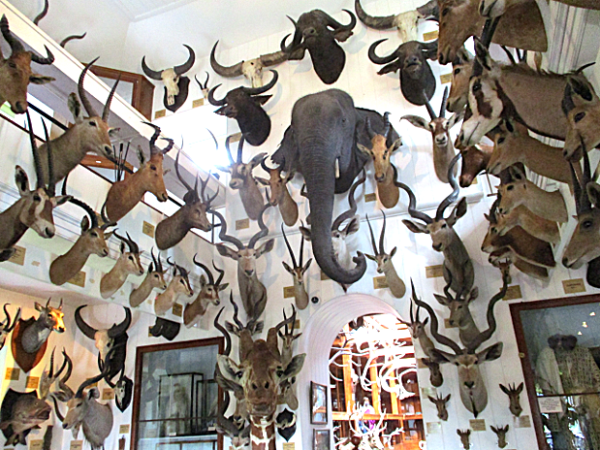
The summer house at Dunrobin Castle
This is the transcript of a talk given by Dr Gemma Smith at the conference Community, Resistance and Resilience: Celebrating 50 Years of The Making of the Crofting Community, which took place at UHI Centre for History in Dornoch on 11th and 12th June 2026. The conference gathered scholars, creative practitioners, and activists from around the world to commemorate this landmark book and Jim Hunter’s broader career.
Can I just firstly thank the Centre for inviting me. It’s an enormous honour and privilege to be here, and I hope that the ramble that follows is to any degree worthy of the event.
I’m going to start by apologising for my obnoxious title, a rod I made for my own back. I’ll explain that in a bit. Obviously, the thread that I’ve decided to pick from The Making of the Crofting Community is Jim’s engagement with postcolonial thought, something that’s also been very important to my own work. So I’m going to talk a bit about that, and also eventually draw on and respond to an extent to his talk from, 2006, ‘History: its Key Place in the Future of the Highlands and Islands’, in which he talked about Highland History in a more global context.
I know that in present company I’m probably preaching to the converted, but I suppose that my obnoxious title expresses some of the frustration I’ve felt at the resistance I and undoubtedly so many others have met in more traditional academic environments, shall we say, where it seems that debate about colonialism is so often derailed with irrelevant and quite tedious arguments, straw men and false dichotomies. So, were the Highlands ever colonised? It is a stupid question isn’t it, and to be honest I’m probably not going to try to answer it.
Instead today I’m going to share some thoughts and reflections I’ve had over the last wee while about things like decolonisation, culture, borders, and the apparently terminal decline of The West. Any of you who have heard me talk before will know that I’m fond of taking you on a wee wander – I am a great believer in the value of going to have a look at things for yourself. Well today we’ll be going for a wander much further afield than usual, to the Highlands via North West Africa, where I’ve spent almost half of the past three years. Colonialism has been somewhat of a preoccupation of mine lately, and my recent experiences have given me new perspectives on everything I’ve been studying for the past twelve years. What follows will be undoubtedly be anecdotal, meandering and tangential, but stick with me – it’ll all come together in the end.
I study Gaelic place-names as a source for the ecological history of the north-west Highlands. We call this branch of historical linguistics onomastics, ‘name studies’, but I’m not sure I’d really call myself an onomastician – the way I use place-names is a bit different. Raasay’s Chrissie Gillies has suggested ‘cultural archaeology’. What I think is probably the most accurate term is also unfortunately the most pretentious sounding. A phrase used to describe Tim Robinson’s work in Ireland is ‘decolonial cartography’ – I know, cringe – but to be honest I suppose that best describes what it is that I am trying to do anyway.
Place-names are a frustrating specialism to have, as whilst the few people who understand the significance of topnonyms as a source look at you as if you’re doing some kind of magic, most people’s eyes just kind of glaze over. I think – I hope – that’s starting to change. Certainly in conservation circles they have started to wake up to the potential of place-names after Roddy Maclean’s groundbreaking report for NatureScot in 2021, especially for mapping historic woodland cover, and one of the pieces of work I’ve done recently was for The James Hutton Institute, about how to interpret Gaelic tree place-names, which is not just a simple matter of picking up a map and a copy of Dwelly’s.
We can do traditional history stuff with place-names – this map for example illustrates some of the findings of The Pilgrim’s Trail project which I did for the North West Highlands Geopark. That was a really satisfying project to do as it was very much with and for the local community, in one of the most fascinating and under-researched areas of the Highlands: the Reay Country or Dùthaich MhicAoidh, where the only historic church anyone ever talked about was Balnakiel, but we can see here from this new ecclesiastical map that by looking at the place-names evidence it was far from some godless wilderness.
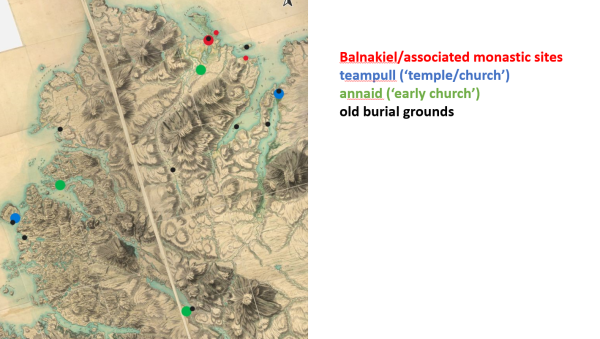
A map of historic ecclesiastical sites in Eddrachillis and Durness, using Roy’s 1747 Military Survey as a base
We can also map historic settlement patterns. Right down the strath starting at Loch Laxford, now the Westminster Estate, there were several significant settlements, before it was all cleared for sheep farming by the last Lords Reay. And what’s more we can identify things like Norse settlements that aren’t evidenced by any other source than the place-names. For example Pont’s early modern era map shows us a Lon Skeggabill by Loch Stack, a place now known as Lone and the site of an estate bothy, which from the name is clearly Norse, probably a -bólstaðr or ‘farm’ name.
What I really love about place-names is that it’s a real generalist’s specialism, because by starting with the name everything about that place is relevant, you can do that real kind of deep mapping of a place until it becomes this kind of living entity in its own right.
Glen Golly is one of them for me. I’m sure many of you know the Rob Donn song about Glen Golly, Gleann Gallaidh nan craobh, ‘Glen Golly of the trees.’ I’m not going to go into the etymology of the name of Glen Golly, it’s grammatically complex and kind of boring. It just means ‘the hidden glen’, as it’s this wee leafy crevice in the middle of miles and miles of rocky, lunar, Reay Forest mountain landscape, a real oasis. When I visited it a couple of years ago, I also discovered that it was a shieling – I found the remains of at least three huts there. So although he doesn’t say so in the song, when Rob Donn was singing about Glen Golly he was singing about the shieling. There’s also an amazing bit of Sutherland folklore about Glen Golly, about how Fearchar Lighiche, or ‘Fearchar the Healer’, obtained his magical powers of healing after being bitten by a white snake that came out of a hazel tree here. I told this story to the NTS ecologist Andrew Painting, who’s just written a book about the remnants of the Caledonian Pine Forest, and he was so fascinated he went to visit too, and he found an ancient wild pine at the end of the glen – so there’s a whole chapter about it in his book Wild Pines which I think is out later this year.
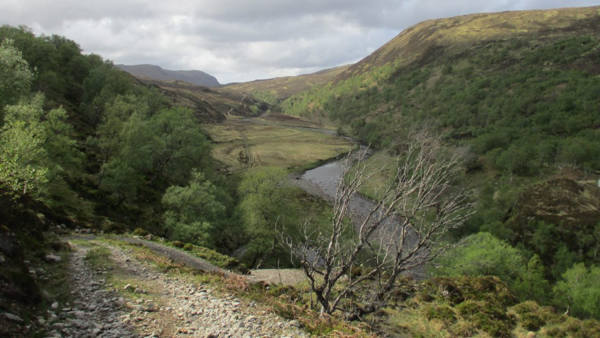
Glen Golly, Reay Forest
Too often, however, place-names are relegated to tokenistic, folksy community-project territory, or used as decorative add-ons to lend dubious authenticity to otherwise completely anglophone historical and archaeological projects. They’re not really treated as a serious source; much like Gaelic poetry, the Napier Commission minutes, and any other ‘bottom-up’ sources, place-names are treated at best as a supplement rather than an alternative to traditional documentary evidence such as estate records. But with what I know about place-names and how they have enabled me to read and understand the historical and natural landscape, I find it crazy that place-name surveys are not automatically included as part of any archaeological or ecological survey, the evidence that they offer as a source being so rich, and just unavailable elsewhere.
So studying place-names allows you to look at everything really, but I think most importantly also as Keith Basso tells us in Wisdom Sits in Places, about the naming practices of the Western Apache, place-names allow you to stand in the footsteps of the ancestors when they discovered the place. They allow you a way into a whole other ontology, a different way of seeing. They are not just labels – they tell you what people noticed and valued about a place. For indigenous cultures the world over, true knowledge absolutely begins with place-names, it begins with the land itself, in our relationship with it, and that is I suppose why I study place-names.
It’s also an inherently political subject, naming and power being so related, and rooted in decolonial and indigenous theory. This is especially true in a country with a land ownership situation like Scotland’s.
So that brings us back to my obnoxious title. Elizabeth Ritchie emailed me at the end of January asking for a title for the funding application. Just call it ‘Were the Highlands ever colonised? And other stupid questions’ for now I said, and I’ll change it to something more sensible closer to the time. Next thing I know I’m getting sent the programme, with this obnoxious title still on it.
By way of explanation, Elizabeth’s email had found me not just well but precisely here in January: lounging on this very sofa, under these mango trees, in a small coastal village called Abéné, in the baobab forests of Casamance, Senegal.
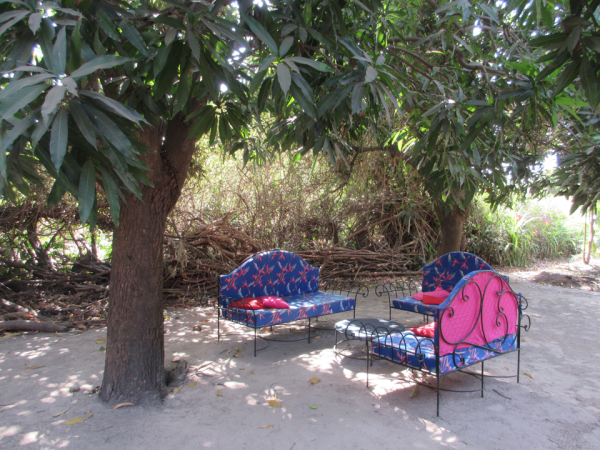
Abéné, Casamance, Senegal
Casamance is in the very south of Senegal. You have to drive across The Gambia to get there overland, or you can do as I did and board the overnight ferry from Dakar in the evening, have a surprisingly nice dinner, go to sleep in your cabin bunk, and wake up the next morning cruising inland down the Casamance river. Casamance is the separatist region of Senegal that has been involved in an often-violent struggle for independence since 1982. Armed militias made travelling there by road quite dangerous, but the situation has stabilised since a peace agreement made in early 2025, so I thought it was as good a time to visit as any. When people from Casamance are travelling to Dakar they talk about ‘going up to Senegal’, they regard it as a separate country altogether, they are different ethnic groups with different languages. There is much cultural variation there, for example while Senegal is a Muslim country – they’re about 92% Sufi in fact – in parts of Casamance native animist traditions are still strong.
Abéné was the southernmost stop in a trip that began three months earlier. At the end of October last year, I flew to Seville, and basically then got the bus to Senegal – or to be more accurate it was eventually about 17 buses, 15 shared taxis, 4 trains, 3 ferries, and 2 tuktuks – covering about 5000km across a huge swathe of north-west Africa, zig-zagging across Morocco, travelling across the Sahara, through Mauritania, down to Senegal. So when I got the email I was at the endpoint of this kind of immersive, three-month journey through all these postcolonial landscapes, which was one of the most enlightening and educational experiences I’ve ever had, something that I will be processing for a very long time to come.
For those of you who don’t know me, for the past few years I’ve survived by doing seasonal live-in jobs in the Highlands during the summer, to buy myself the time off in the winter to firstly finish my PhD, and then latterly just do various other things that aren’t cleaning up after tourists.
I’ve spent most of this time living in Morocco, which has been a transformative experience as someone who didn’t have the opportunity to travel extensively when I was younger. Maybe the most important thing I’ve learned from it is that nothing in the world is really as we in The West are told it is, especially when it comes to the lies we are told about Africa and in particular ‘Muslim countries’ – as if that were even a meaningful category in any sense.
After travelling as far south as Sidi Ifni the winter before last, the thought of carrying on to Senegal overland didn’t seem so daunting, so that’s what I did this year. I’m very interested in Sufism, especially the Baye Fall, a Senegalese Sufi brotherhood who were founded in the late 19th century on decolonial principles, and whose beliefs are based on what they call Ajaana Fall, the presumption of heaven on earth – the idea that we don’t need to wait for heaven, we are living in heaven now and we should act like it, we are all brothers and sisters and our purpose is to look after each other. But the main thing that interested me about Senegal was that it was a West African country that had, like Burkina Faso with Ibrahim Traore, apparently got the young, progressive, decolonial leader that the people wanted.
Serious political unrest erupted in June 2023, when the then-opposition leader Ousmane Sonko was jailed by the near-dictatorial previous incumbent Macky Sall. To widespread surprise in 2024 Sonko was then elected as Prime Minister to President Bassirou Diomaye Faye, after running on a leftist, anti-establishment and pan-African agenda promising radical reform. The new government were transparent from the start that things were going to get worse before they got better, after decades of corruption had accrued astronomical debts, a spiralling cost of living and youth unemployment at a third. The new administration kicked out foreign companies and military, but that also exacerbated the economic crisis on some levels. That coalition has now collapsed in just the past few weeks, with Sonko, who the people are still firmly behind, being sacked as PM but then elected as speaker of the parliament.
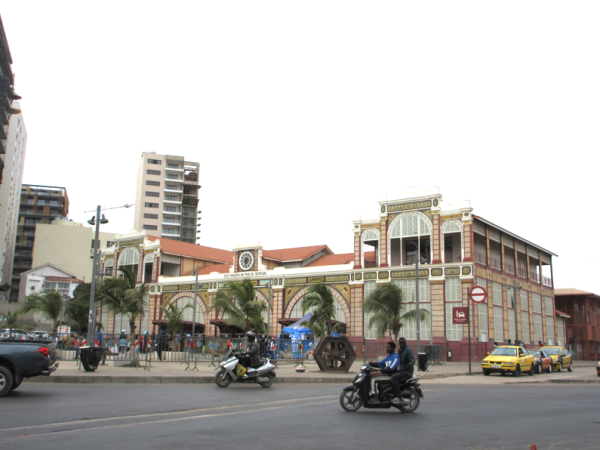
Downtown Dakar, Senegal
This all obviously dashed my naïve outsider’s ideas about the place, as did just the experience of being there for four weeks. The capital Dakar in is a strange city: huge, half of it a building site, one of the most expensive cities in Africa, and the gap between rich and poor is staggering. Dakar’s the location of one of the WHO’s major African centres, an enormous American embassy, the offices of various NGOs and charities. Almadies, the area all the ‘expats’ live in, is full of gated apartment buildings with armed guards, American supermarkets, and restaurants with European prices. And Dakar of course was one of the epicentres of the transatlantic slave trade, it’s the most westerly point of mainland Africa, and Goree Island, which is now an open-air museum, was for many West Africans their last sight of home.
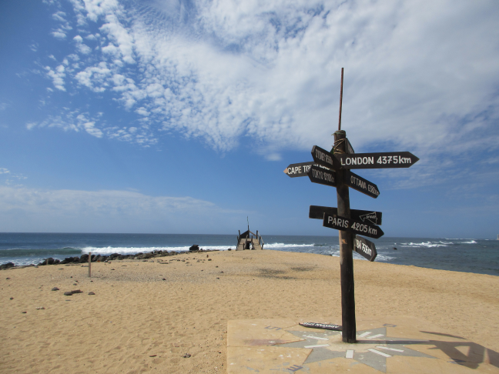
The most westerly point of mainland Africa, Dakar, Senegal
Prior to Dakar I was in Saint Louis, the former capital of what was known as ‘French West Africa’ for 300 years, and just a haunted place. The island covered with all that crumbling old UNESCO-certified colonial architecture is undeniably beautiful, but cross over the second bridge onto the island closest to the sea and you’re in the area where the fishermen and their families live in slum housing, with the overcrowding only exacerbated by recent coastal erosion. But you can just get a taxi right through all that to the resorts at the end of the peninsula, if that’s your kind of thing… Even as a backpacker staying in a guesthouse owned by a Senegalese family in a very local neighbourhood, I felt quite inappropriate as a tourist in Saint Louis a lot of the time, and I just can’t get my head around people who go places like that for a luxury experience. And that was just the overwhelming lesson of Senegal for me, was just the way that in so many places colonialism never really ended, there is no ‘post’ about it, it never went anywhere, instead it just mutated into more socially acceptable forms.
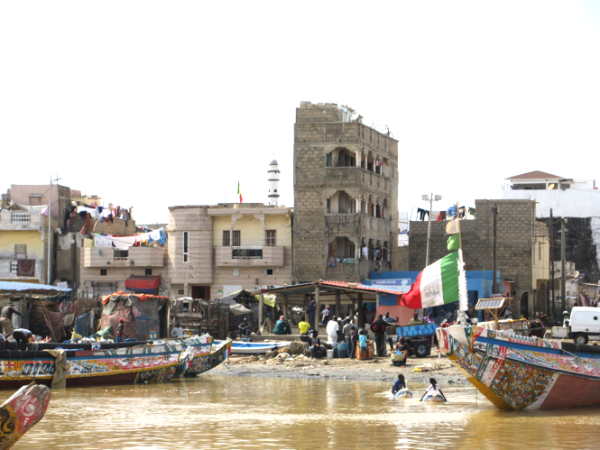
Saint Louis, Senegal
Secondly, if you look at somewhere like Saint Louis, and somewhere like say Tetouan in the north of Morocco, the former capital of the Spanish Protectorate, there is just no comparison. They are both former colonial capitals, but the two cities could not have had a more different experience of colonialism, they’re almost at two ends of a spectrum. And what this really cemented for me is that there are myriad experiences of colonialism – there is no easy checklist we can tick off that gives us simple yes/no answers.
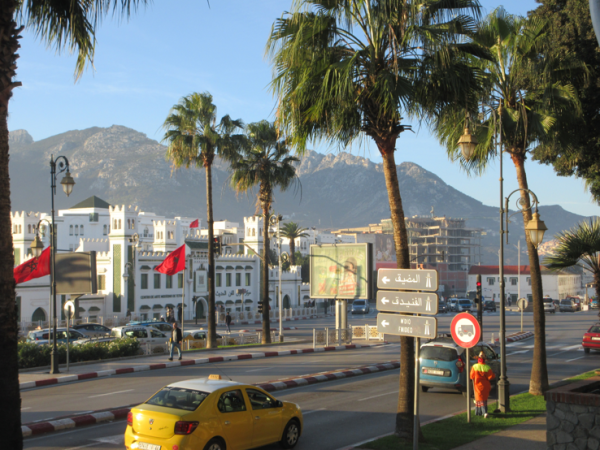
Tetouan, Morocco
What I learned about the tensions within West Africa just complicated that further. In Senegal, if they call you a Berber, it’s basically like calling you a meanie. Those Morocco/Senegal tensions that really came to the fore in this year’s AFCON final were not just about football – the Berbers, or the Amazigh as they’re now known, were deeply involved in the slave trade, they sold sub-Saharan African people into the slave trade, the Amazigh and Arabs enslaved people from Saharan and sub-Saharan Africa even before Europe got involved. But does Maghrebi people’s involvement in slavery mean that the Maghreb was never colonised? Of course it doesn’t.
On the subject of Western Sahara – if anyone wants to hear a rant please ask me about it after, but I’ll probably sound like some rabid Moroccan nationalist, purely due to the ahistorical and hypocritical portrayal of the situation in the West. I think we can tell that the ruler-straight borders we see on the map were not the work of native nomadic peoples. To be fair it’s more Moroccan Sahara than it ever was ‘Spanish Sahara’ – prior to French and Spanish involvement this was all the Maghreb, ‘the land where the sun sets’, as opposed to the Mashriq, ‘the land where the sun rises’, i.e. the region we used to call the Middle East and are now calling West Asia. For Moroccans, reclaiming the Sahara is very much part of their ongoing decolonial struggle. Essentially the Saharan conflict has been a proxy war between Morocco and Algeria – Polisario were originally a student-led organisation, but were funded by Algeria from the start. This is a situation created by the actions of Spain and France during the Scramble for Africa, and Sahrawi people have been used as political pawns ever since. None of this is easy stuff, even in places none one would disagree were ever colonised.
So to understand colonialism I think we need to be able to understand it as something that is amorphous, rhizomatic, almost cancerous in nature. I think one of the best descriptions of colonialism is from the Martinician writer Aimé Césaire’s Discourse on Colonialism, in which he says that it is easier ‘to agree on what it is not’, in his words:
‘neither evangelization, nor a philanthropic enterprise, nor a desire to push back the frontiers of ignorance, disease, and tyranny, nor a project undertaken for the greater glory of God, nor an attempt to extend the rule of law. To admit once and for all, without flinching at the consequences, that the decisive actors here are the adventurer and the pirate, the wholesale grocer and the ship owner, the gold digger and the merchant, appetite and force, and behind them, the baleful projected shadow of a form of civilization which, at a certain point in its history, finds itself obliged, for internal reasons, to extend to a world scale the competition of its antagonistic economies.’
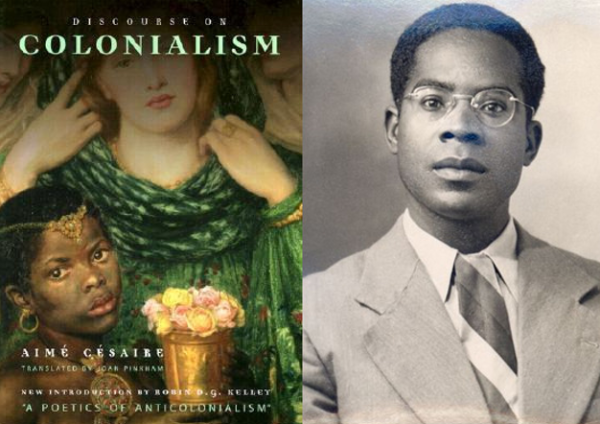
Aimé Césaire
So, according to Césaire, colonisation then is the imposition of an economy based on appetite, competition and force.
The Cameroonian historian Achille Mbembe also has I think a very useful framework for thinking about colonisation, and that is by doing so in terms of ‘the politics of space’, which is looking at history in terms of how populations have been denied space, or been excluded from it, and how they have subsequently moved or been moved around in space.
I mean, if you really want to argue that all of this stuff has no relevance to the history of the Scottish Gàidhealtachd, feel free, you know. Knock yourself out.
And the disease of colonialism is ultimately a disease of the imagination, of the political imagination, because now we can’t imagine a way out. This is what David Graeber and David Wengrove talk about in The Dawn of Everything, that if we’re asking about the origins of inequality we’re asking the wrong question, what we need to ask is how did we get so stuck?
I went back to university to start my undergrad in Scottish History and Celtic Studies on Monday the 22nd September, 2014. I knew fine well at the time that it was either going to be the most inspiring, or the most depressing time to start studying Scottish History. For most of 2014, I’d been working in a pub in Glasgow city centre, a place with a huge big horseshoe bar, and from about six months before the referendum, every night without fail, when you put the lights up and turned the music off, every group of folk around the bar would be debating it, it was all anyone was talking about. And I remember the night of the referendum, a lot of my pals were out celebrating already, but I didn’t really want to get ahead of things, so I stayed in. I was living on Sauchiehall Street, and I sat on my window ledge that night watching the street below, which was absolutely rammed with folk, mostly young people, out celebrating and partying, singing ‘Flower of Scotland’, driving up and down waving Saltires… It made me quite emotional, as I never thought I’d see political engagement like that in my lifetime. It was such a hopeful time.
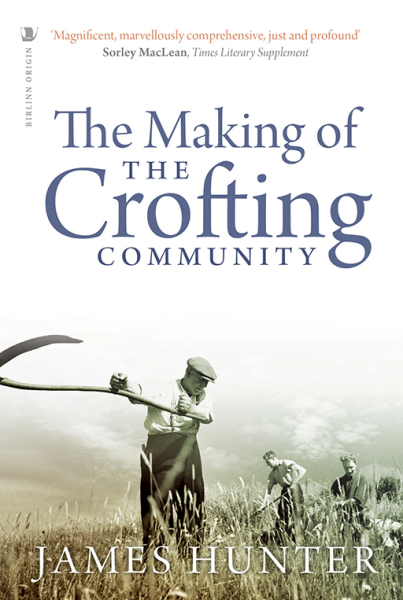
There were two books that were instrumental to me returning to uni to study Scottish History.. I found Alastair McIntosh’s Soil and Soul in a bookshop in Stromness, and after reading about it there, I then went out and bought a copy of The Making of the Crofting Community. It blew me away. It was absolutely the most furious thing I’d ever read, so searingly consistent and persuasive. The fact that it was written in 1976 by a mere twentysomething was something that impressed me greatly. And much like Jim, my motivation in studying Highland History was that I found what I had read before The Making of the Crofting Community to be ‘wholly at odds’ with my own experience of the landscape, but also what its inhabitants had shared with me about their history.
If you’d asked me back then if I could ever have seen myself leaving Scotland, I’d probably have looked affronted by the very suggestion, maybe even recited a bit of Macdiarmaid at you – ‘The rose of all the world is not for me. I want for my part only the little white rose of Scotland, that smells sharp and sweet—and breaks the heart.’ But then it did break my heart. Who could have predicted then where we find ourselves now?
Césaire says that ‘..it is not the head of a civilization that begins to rot first. It is the heart.’ I’m not sure about that. I think sometimes both rot at once. I know that some people find my writing hopeful. I find that ironic. I’m not a very hopeful person, I certainly don’t have much hope for this country, and by that I mean the UK, because like it or not we’re apparently still tethered to this sinking ship.
I know that despite the precarity of my current lifestyle, I’ve enjoyed a great luxury by being able to leave for half the year, I have no ties here, and just coming from a place with a strong enough currency and strong enough passport that you can actually travel out of your own country puts you in a privileged 10-15% of the world’s population. I acknowledge my privilege at being able to get out, and also to have spent that time experiencing a culture that is still relatively warm, relational and cohesive.
Every year obviously, I keep up with the online ‘discourse’ while I’m away, and I brace myself for the culture shock when I return to the UK. And every year, it just seems to me exponentially worse. I’ve been disgusted recently to witness the rise of the far right in Scotland – another thing I perhaps naively thought I’d never see. It’s also brought home to me how much I existed in a bubble in my time in academia, how all of us who have access to these kinds of events and discussions do exist in a wee bubble. I’m sure everyone saw the footage of the fascist march in Glasgow on Tuesday night. Do not for a second think this is just a Rangers fans in the Central Belt thing. The last three summers, I’ve worked with folk from all age groups across Wester Ross, Skye, and the Cairngorms, and with notable exceptions I could count on one hand, political opinions these days seem to fall between ‘I’m just not interested in politics’ to ‘stop the small boats’ – there doesn’t seem to be much to the left of that any more, class consciousness is almost completely non-existent, and logic has been largely supplanted by emotional reasoning.
And to me, it seems it’s heart and head: every year there seems to be a shocking decline in empathy, and just an absolute scrambling of people’s brains when it comes to their ideas about history. And I think that’s because for too long their voices have been excluded from their history, for too long Scottish and particularly Highland history has served the interests of landed power by perpetuating a colonised and colonising worldview. People can tell they are not getting the full story, they can tell there is something missing. And just now they seem willing to fill that void with absolutely anything the algorithm feeds them. And that contraction of empathy, that increasingly narcissistic culture we are seeing, well I mean narcissism arises from insecurity, one of the defining qualities of modern life, not just in the sense of material insecurity but also that kind of epistemological insecurity that people seem to be really suffering from just now.
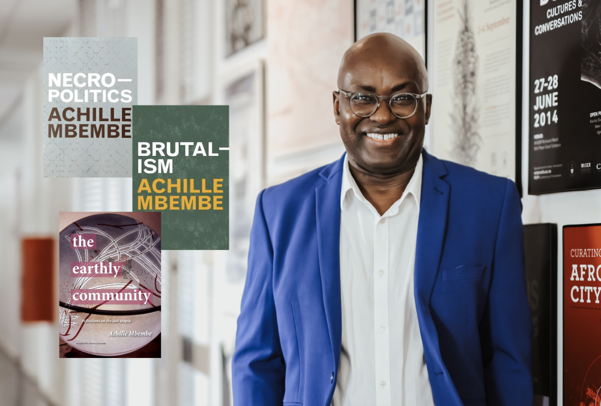
Achille Mbembe
Achille Mbembe talks about this, the confusion today between knowledge and information. Technology has on one hand made us so unified in terms of a sense of connection, of all belonging to the same earth. But then we are also so fragmented along multiple lines – identitarian, religious, racial, etc. There are deep inequalities within and between nations, and also a desire from people for separation that only seem to be increasing. As Mbembe puts it, the vital challenges of today are planetary in nature, but planetary consciousness seems distant. He says that the challenge for critical thinking is to leave behind the provincialism and insularity that has driven the Western paradigm into a cul-de-sac, this kind of intellectual inbreeding that has got us stuck where we are now. For Mbembe, decolonisation means finding ways of thinking that take seriously our common belonging to a shared earth. This will necessitate decentring Western thought, or as he puts it ‘shifting the geography of reason.’
Our challenge as historians is to find a way of telling stories about our past that engage and engage with people, and I think that we can only learn to do this by doing as Mbembe recommends and turning to other libraries.
It’s important to remember I think that until we started colonising and pillaging, throughout medieval times to our closest neighbours across the Mediterranean, Europe was generally regarded as an intellectual backwater full of barbarians and religious zealots. There’s a credible argument to be had that the ‘Enlightenment’ was a result of the self-reflection that contact with Native American intellectuals prompted in European thinkers. And would the book we have come to celebrate today have been written had a spirited young historian not picked up a copy of The Wretched of the Earth sometime in the early 1970s? Maybe Jim can answer that later.
So before we can become unstuck, we have to come to terms with not just our barbarism but also our ignorance. And if that idea makes you feel uncomfortable, you need to have a wee think about why. Because white fragility is quite something, and accountability is not the same as repair. Too often our attempts at decolonising the institution can amount to so much self-flagellation, a curiously Eurocentric kind of self-flagellation that can look a lot like the subtle reassertion of European moral superiority. True repair requires more listening, more humility. If we are serious about rekindling community, resistance and resilience, we need to look to the wisdom of people who did not sacrifice their culture at the altar of whiteness.
Aimé Césaire said that ‘At the end of capitalism, which is eager to outlive its day, there is Hitler.’ Looking at what’s happening in the world today, it seems we are doomed to repeat this trajectory. He also said that the salvation of Europe is not a matter of a revolution in methods. It is a matter of the Revolution. I’m not sure if I have much faith in that happening.
I know I’ve been a bit of a doomer here, well I am a bit of a doomer these days – it’s just how I’ve come to see things. So in order to finish on a hopefully more optimistic note, I want to suggest one lesson from other philosophies we can maybe take away today, as a counter our Western necropolitics, is this Baye Fall and broader Sufi Islamic idea I mentioned, that of the idea of heaven on earth, that all we need is right here and that we should live as if we are already in heaven, as brothers and sisters. What are we waiting for? If there’s one thing I’ve learned from my travels, it’s that everything we want and need in this country is right in front of us, it’s right there for the taking. Our problems are in our heads, and in our hearts. And the stories we are telling about the past – or more correctly the stories that we are not telling – are fundamental to healing us.
So, coming back to The Making of the Crofting Community. It’s a book that I have returned to again and again through my studies, not just for reference, but for inspiration and for comfort that I was on the right path. I suppose what I’ve got above all from my readings of Jim’s book over the years, is the reassurance that it’s okay to mean it, that it’s okay to have a deep personal attachment to and strongly-held opinions about your academic subject.
The Indian spiritual teacher Jiddu Krishnamurti famously said that ‘Truth is a pathless land.’ Truth is a pathless land. And I think that History inches a step closer to truth, each time one of us strikes out on a new path, each time one of has the courage to stand up like Jim did and say: ‘that’s not how I see it.’
Grateful to you for indulging this wander. Thanks for listening. Salam.
I cannot begin to say how deeply this resonates with me. I arrived iin Inverness at the evry start of 1994 to take up the new post of Regional Archaeologist for the then Highland Regional Council. My remit was to reserch, conserve and promote the archaeology of the region. I was at the time a senior lecturer at Bournemoth University’s School of Conservation Sciences and had spent the previous few years developing a BSc (Hons) in Heritage Conservation. With Mark Brisbane I had authored an English Heritage book ‘ A Future for our Past?’ My background was in landscape archaeology and especially in rural settlement studies. I have also had a lifelong interest in ecology and the relationship between cultural and ‘natural’ history; and in community development. And the philosophy expressed here feels very aligned with mine.
My archaeology has always focussed primarily on the medieval and later periods, and has involved interdisciplinary study including placenames and detailed documentary research. I was surpised to find when I arrived that this was comxpletely against the then academic grain. I was told that there was no medieval or later settlement archaeology in the Highlands. That Gaelic was ‘never a written language’. In fact that the highlands were effectively a ‘wild’ terra nullis when the capitaists moved in in the 18th c. Apart from Glasgow University, there ssemed to me to be almost academic research interest in historical archaeology in the highlands.
After arrival in the highlands I set up various projects (Highland Archaeology festival,; Certificate in Practical Field Archaeology with Aberdeen University; Environment and heritage degree UHI community archaeology projects, treasure trive sases to keep discoveries for Historic local benefit etc), took archaeology (defined widely) into the planning process as a ‘material consideration, helped to set up the Highland Historic Environment Record, and included evidence of 19th and 20th c rural depopulation.
I soon ran into growing opposition from the Scottish establishment, including my employer. In 2004 I resigned and set up a consultancy, Highland Archaeology Services ltd, which is still thriving although I retired in 2016 and moved from the east coast to the west. I still find myself ‘othered’ and challenged in a variety of ways and I think this is the result of a the psycholoogy of colonisation.
An early project was to write a ‘Making of the Highland Landscape’. This has been an extraordianrily difficult book to write as the more I researched the subject the more I found myself challenging much ‘received wisdom’.. Jim Hunter’s work was an exception.
The book was originally intended to be a straightforward, readable guide to the subject, but I have continued to research and work on it for over 30 years now and it has become very much more than that. I am so encouraged by reading this piece. It says a lot of what I have been trying and failing to say for years. If anyone is interested to discussing this subject further I’d be keen to do that. I’m keen to pull it all together, publish, and be damned.
This is an excellent article. Really interesting and very informative. I also liked John Woods comments..
Popular subject these days and so it should be too. I think most thinking people can work out that Scotland was effectively colonised by England in 1707 and so it remains today. The evidence is overwhelming but you don’t need to be an historical researcher; common sense does just as well.
To the very specific question, “Were the Highlands ever colonised? And other stupid questions” Stupid question???????
The highlands of Scotland are part of Scotland so, yes, the Highlands of Scotland were colonised, and I might add, brutally genocided; this needs to be spoken about and discussed, absolutely does!
I think it goes beyond that. The highlands were being colonised by the Scottish Kingdom long before the Act of Union. The Norman lords asserting themselves. James IV with his ‘pilgrimages’. James VI with his Fife Adventurers etc.
The Gaidhealtachd is in relation to Scotland much as Wales is to England. The Kingdom / Lordship of the Isles was taken over and destroyed at much the same time as Wales was united with England , though it was a Welsh prince who conquered England. (As it was a Scots king who inheritaed the Engl;ish crown later). Scots speakers colonising Gaelic speakers, Lowlanders regarding Highlanders as ‘Teuchters’ and so on. The ‘hatred of the Gael’. Scotland that was bought and sold for English gold in 1707 was Lowland Scotland. The genocide and ethnic cleansing that unfolded after Culloden finally cemented the military conquest of the highlands and paved the way for their seizure and ruthless capitalist exploitation, which still conrinues today. Aspects of the local culture were first attacked, then co-opted, reinvented and sold back to us. As in so many other colonies.
The highlands are in practice, Scotland’s colony. And Scotland is England’s colony. And England is a colony of the US. So that makes us triple colonised. Rule from Edinburgh, London, ir Washingron makes very little difference to us. Holyrood goivernments are as centralising and authoritarian as Westminster ones. Nobody is listening. The result has been the growth in the highlands of a collectrive PTSD, a desire to keep quiet and not to rock the boat. It’s called ‘small c conservatism’. It is the reaction of a colonised peopl;e who have had the stuffing beaten out of them for hundreds of years, and have internalised defeat. The days of the Crofter Wars, the Land League, are long gone. Because unlike in Ireland, or Wales, highlanders have never been supported by the ‘Scottish ‘establishment;’. In my direct experience, democracy and the rule of law are still myths in the Highlands. There are not enough people left here to matter at all – and those highlanders who remain are mostly too cowed and fearful – or too complicit -to speak up.
The Scottish ”establishment’ is really just a branch of the ‘British’ establishment. Indeed it was James VI who invented the idea of ‘;Great Britain’. It includes the latter day parcel of rogues, bought and sold by London (and these days, London’s own masters in the US); others would like to take control for themselves, but either way the highlands are still regarded as effectively a colony, to be exploited for the pleasure and profit of the super-rich., The cheviot the stag and the black oil have given way to the drive-through, ‘get away from it all’ tourism, the fish-farms, and of course the harvesting of our wind energy to power massive data centres and techno-fascism . But the use of the highlands for military recruitment, testing and traiining – from the rockets to the bombing ranges to the nuclear industry to Gruinard island and the rest – it’s got a long history. .
Scotland needs to wake up and recognise this. We need not just independence as a country from London and Washington, but a decentralised country that recognises, respects and empowers its regions and their cultures. The only way to move on from colonialism is through unity in diversity and mutual respect.
I was thinking about who, how and why people named geographical features, when and what names stuck, and it seemed at the time that locals are unlikely to have the final say, otherwise there would be too many duplicates across a region, a lack of a sense of what makes a feature distinctive regionally, and a kind of blind-men-and-elephant effect where there are unknown extents (like rivers, coasts, mountain ranges and so forth). After all, there are only so many components:
https://en.wikipedia.org/wiki/List_of_generic_forms_in_place_names_in_the_British_Isles
I imagine this works across Africa, where travelling traders might have imposed distinct names before colonialism. And from different sides, one feature might accrue multiple names (‘Lake Victoria’ being a later imposition).
It may be that some imperial administrations were uncaring about local names and might as well have imposed abstract systems like numbers for taxation districts. Or on the disintegration of an empire, rival power centres might claim the same name (so many cities called Alexandria).
It doesn’t mean that such naming would be rational or even useful sometimes. There might be occasions where misleading or threatening names were used to confuse or frighten invaders. An other times that names had unfortunate associations or interpretations for exploitative seekers of resources.
Sometimes local names would be erased by colonisers to aid the pretence of Terra nullius or the existence of a different language group in a contested homeland.
Sometimes names left the Scottish Highlands and appeared on slave plantations on other continents and faraway islands. And sometimes names would have returned from those places.
So naming must be affected by travel, scale, the needs of navigation and distinct identification, administration and jurisdictional requirements. And presumably to identify colonies of all kinds and sizes and parentage. And names will change over time for all sorts of reasons.
What is the balance that should be struck between romantic and rational placenaming?
I don’t think there is a balance to be struck. Places are not named for either romantic or rational reasons. Both these concepts are just products of western, 19th and 20th c thinking.
Places get named for a variety of reasons, including cities named after their ‘founder’ like Constantinople or Alexandria, and they can be transferred from one place to another. Places can be renamed by authority – as in Leningrad or Stalingrad, but the previous names may re-emerge. New York was originally New Amsterdam, but was renamed by the British for the Duke of York (later James VII). Many villages and towns are named after their early medieval owners.
But the oldest and most durable names refer to the local topography. And these names can survive changes of language and culture around them. The earliest records of York in England refer to Eboracon, generally thought to mean a place of yew trees (though other trees are available). The name is Celtic. The Romans Latinised it to Eboracum. The Anglo-Saxons took over and it became Eorforwic. This means place of wild boars 0- which some research suggests may have been the meaning all along. In the Scandinavian period this becme Jorvik, which in turn became the English York.
So the whoile subject is complex and full of pitfalls. But the relationship to local characteristics is found in the oldest names. There is lots of duplication because most names were given by local people and there was no central control.
And these names, across England and Scotland alike, are all ‘Celtic’. Which means proto-Gaelic. The river Ouse flows through Bedfordshire. It is from the same root as th Gaelic uisge, water. As Is (probably) the River Ewe (Gaelic Iu) where I live.
@John Wood, interesting examples, but many places were named after mythological concepts and characters. What is Arthur’s Seat but a romantic name given to something that might just have previously been known locally as ‘the Crag’?
And what are the 12 revolutionary Arrondissements of Paris but an expression of rational naming (in a much bigger scheme)?
https://en.wikipedia.org/wiki/Arrondissements_of_Paris_(1795%E2%80%931859)
Not every renaming scheme was as extreme as the Khmer Rouge’s Year Zero in Democratic Kampuchea, which I guess combines both rational and romantic (practical and ideological) reasons.
Neither small-r rationalism nor romanticism is the peculiar province of Enlightenment Europe, and I hope I’ve given enough examples to show this.
These are just a few of the many questions and issues onomasticians grapple with in our research. If you are interested in reading further on these subjects, you may enjoy perusing the leading journals in the field: Names, Onoma, or the Nordic Journal of Socio-Onomastics. For Scottish names, there are bibliographic resources available on the Scottish Place-names Society website.
I’d agree with John that your question about ‘the balance that should be struck between romantic and rational placenaming?’ is a redundant one, place-naming being neither romantic nor rational.
@Gemma Smith, thanks for the reply and recommendations. As for ‘romantic and rational’, that was a perhaps-clumsy paraphrasing of what your article calls ‘heart and head’. I’m not a geographer or linguist; my training and interests are more towards political philosophy, political science and the psychology that underpins that. From this different perspective, please allow me to state my case that there are ‘romantic and rational’ cases for naming places. I don’t propose a false dichotomy: there are many other reasons for naming, some I’ve noted previously.
If we take ‘romantic’ as meaning names that make you feel good, we might take evidence that there are more belmonts than bogsides. There are obviously choices when borrowing and renaming places, and place-names might carry over into, say, dynastic surnames. During wartime, a nation might rename places too much associated with the enemy (that’s maybe a stretch of ‘romantic’, but that’s essentially my meaning here. It will be easier to contrast with rational schemes.
There have been reforms and revolutions that have brought in rational place-naming schemes. From the reforms of Cleisthenes
https://en.wikipedia.org/wiki/Cleisthenes#Reformations_and_governance_of_Athens
to the redrawing of constituencies in Britain to make them more equal in population (and give them new names), such administrative reforms are essentially rational. There can be unintended consequences, like today’s postcode gangs. The French Revolution took rational naming seriously too.
I think that makes my case, but I’m off to watch the football, so I might have missed something.
The examples you give are indeed romantic and rational, but they’re not the Gaelic, Norse and Pictish place-names dating back to the early medieval to early-modern period that John Wood and I are talking about. There are onomasticians who study Greek and modern British place-names, but I’m not one of them. My specialist area is North West Sutherland.
Have a read of the Keith Basso book (Wisdom Sits In Places). I think you’d get a lot from it.
I think it’s a great shame & in fact shameful that in order to appease their financiers & retain tenure at Scottish, i.e., British universities, academics are only too willing to engage in denial & create as much propaganda as possible as part of the colonial endeavour to obscure what has long been & remains the unpalatable, therefore controversial, truth. I suppose, as the reality for Highland people gets worse, we can expect yet more of this guff.
I’m not sure you’re referring to me, or even this article, in your incoherent comments, but if you are I must say your assumption that I have anything like ‘tenure’ at a university or other educational establishment did give me a laugh. I can assure you I write entirely independently, and that all views expressed are my own.
eh no, your views reflect the usual academic position which anyone with eyes to see knows to be untrue
I can only ‘lol’ to that
Glad you’re amused. I’m surprised you don’t have tenure, why don’t you apply, I’m sure they’d be glad to have you.
‘Tenure’ is an American thing, Mark. Doesn’t exist in the UK. Not your only misunderstanding here by any means. Best of luck going forward! Salam.
Was about to say the same thing Gemma, there is no such thing as tenure in the UK (though in the distant past there was something similar I believe). Online culture has led to this idea that US tenure is applied everywhere and ironically believed by people who wish to use it as a weapon to attack academics for not telling the truth! The argument is based on a lie.
Academic jobs are much like anyone’s – if you are lucky you have a permanent contract, then rolling contract, then fixed term, and at the least secure end, part-time hourly paid. These days though there is not a great deal of security in a permanent contract as redundancies are rife right across the sector with tens of thousands being made redundant in recent years. Very many academics have an expectation they could be out of job at any time right now, and they are not wrong.
this may or may not be of interest https://www.declassifieduk.org/how-britain-is-wasting-its-defence-budget/
You are a bit quick to dismiss the Western Sahara conflict as one between Morocco and Algeria, I think. This denies any agency to the Sahraoui people. Opposition to Spanish rule and for Sahraoui independence predated the formation of the Polisario Front (which supports self-determination). Morocco and Mauritania invaded in 1975 with the effective agreement of Spain, while the ICJ and the UN recognised the right of the Sahraoui people to self-determination. Certainly, the issue is a highly contentious one between Morocco and Algeria (Mauritania having given up its claim to the territory), but it has also become internationalised with the US and France supporting Morocco’s claim against Polisario. Morocco is effectively engaged in an enterprise to throttle the movement for self-determination, by means very reminiscent of … colonialism.
@Paddy Farrington, I don’t know enough about the conflict to comment, except to note that the recent success of the Moroccan men’s national football team has been used as a unifying force as well as highlighting diverse opinions on what Morocco is. And there is also the diaspora to consider:
https://www.compas.ox.ac.uk/article/pride-of-place-the-story-behind-moroccos-world-cup-squad
and Moroccan authorities’ keenness to host a future tournament.
If you re-read that paragraph, I’m not sure I did ‘dismiss’ the Western Sahara conflict as anything, not did I say it wasn’t a colonial situation – you’re putting words into my mouth here. Having spent a fortnight travelling across Western Sahara, I’m not sure any other country would be laying claim to the place if it wasn’t for the phosphates. What I was doing was explaining some of the historical context that makes things look very different from the other side. My essential point is that it is a situation that was created by European colonialism.
I certainly agree that it is a situation created by European colonialism, but I don’t think this in any way absolves Morocco, which is currently engaged in a form of settler colonialism there. It is difficult to see how the Sahraoui people (now a minority in their own country) will ever be able to exercise their UN-recognised right to self-determination.
Again I did not say Morocco should be absolved of anything – otherwise I agree with you entirely. But I definitely don’t think we are in a position to criticise, and I am firmly of the opinion that Europe has no business concerning itself with MENA affairs – we’ve made quite enough mess.
Were the Highlands ever colonised?
Of course they were by the Gaels who arrived from Eire in circa 6th century AD and replaced/interbred with the local Picts.
In turn the Gaels where then colonised’ by the lowland Scots who unlike the Gaels had embraced protestantism.
As for Senegal (and for that matter the rest of Africa) they had been ‘colonised’ by successive waves of tribal incursions over a millenia until Islamic/Arab slave traders arrived in the C14th who initially sold the black slaves to their fellow Muslims in North Africs until the Portugesue arrived in the C16th who then paid the Arabs/local tribes better prices to ship the slaves over to Brazil.
Finally the French ‘colonisers’ arrived in the C19th and ,along with the British imposed their white/eurorcentric view that slavery was wrong and much to the chagrin of the locals who had been growing rich on the trade stamped it out
The history of humanity is the movement and replacement of people by other people.
.
@John Learmonth, a racist like you denies that enslaved Black Africans might have considered themselves wronged and insists on starting the European history of racialised chattel slavery on extremely belated moves towards selective abolition. After all, while Europeans made their forms of slavery legal, they dealt with criminals and overturned regimes which criminalised slavery all to further their own debauched interests in the most atrocious kinds of slavery.
But tell us, do you consider the view that abducting, raping, torturing and murdering children is wrong to be a simple cultural preference? Maybe it’s OK, maybe it’s not?
Or do you just worship evil in all of its forms?
I know it is the ‘received wisdom’. that you read in all the books, but there is no actual evidence that
“Were the Highlands ever colonised? Of course they were by the Gaels who arrived from Eire in circa 6th century AD and replaced/interbred with the local Picts”
On the contrary Gaelic / Q Celtic language and culture has the best claim of any to be ‘indigenous’ to Scotland, and I think to Britain as a whole. It was here long before the founding of Scottish Dalriada. There were Gaels in Scotland, and of course, Picts in Ireland and elsewhere too.
Thanks, Gemma. Brilliant as ever. “Amorphous, rhizomatic, almost cancerous in nature” is maybe the best description of colonialism I have read. Add to that “truth is a pathless land” and you bring out the need to get away from every kind of binary and essentialist thinking.
What is the opposite of colonialism? Maybe autonomy or self-determination? But there are no fixed, essential selves, and people (individuals as well as groups) often construct their own selfhood at the expense of others.
It’s interesting that you are interested in Sufism. One inescapable problem is monotheism and the existence of competing monotheisms, which lead inevitably into varying forms of absolutism. I get the impression that Sufis, though nominally Muslim, in practice go a long towards polytheism. I suspect that, if people want to practise democracy while also feeling the need for god figures, then polytheism is the only workable answer.
I’m not sure if heaven is a helpful idea. I don’t see how to disentangle it from absolutist ideas about infinity and eternity, but that may be a limitation of mine. But if heaven is possible, I suspect it can only exist on earth (and can only be finite).
Sorry – “… go a long WAY towards polytheism”.
Thanks for the thoughtful comments Dennis.
What is the opposite of colonialism? You might be right. Another equation Césaire makes with colonialism is ‘thingification’.
It’s the music that brought me to Sufism: first the Master Musicians of Jajouka, then I got really into Gnawa music after spending so long in Morocco – you kind of have to – then I started reading Rumi and there was no going back.
The only kind of heaven I believe in is the one we inhabit now. To use the words of Chief Luther Standing Bear, Earth is bountiful and we are surrounded with the blessings of the Great Mystery.
Thanks, Gemma. Another (very amateur) thought on Sufism. In general, beliefs and practices are intertwined and it’s a mug’s game to try and separate the two. But insofar as it is possible, I think Sufis try to mediate between monotheism and polytheism through cults of saints and local shrines. The same may be said of Roman Catholic and Orthodox mediation through saints, holy relics, etc. But there is a significant difference: Sufis are organised through brotherhoods – relatively egalitarian and democratic – whereas the RC version in particular is strictly hierarchical and top-down. Maybe one difference between ‘them’ and ‘us’?
And maybe also a reason why heaven can exist here and now, as in dance?
But is no the idea of indigenousness and overturning by colonialism based on the idea there are ‘fixed, essential selves, and people’? They are two sides of the same coin. Apart from very isolated places in the world, all indigenous people were colonialists at one point, it all depends on how far you want to go back, or perhaps more importantly, how legitimately far you can go back.
This presents a real paradox for totally legitimate objections to more modern colonialism. At what point do you say these are the people who were ‘originally’ wronged?
There is no real opposite of colonialism. I would argue there are just different types of it as human beings have moved about this planet, often in great waves, and more enduring forms that we have come to accept, have been normalised (e.g. the arrival of the ‘Celtic’ peoples in these islands, or in what is now England, for some, the Anglo-Saxons or perhaps later still the Normans) and others we do not. It can also be argued some forms of ‘invasion’ are also more benign than others. The key is determining what are the most exploitative and destructive.
If this perspective is rejected then you really do have to say who the indigenous people really are, and why they are the ‘essential’ people, and thus who is not. You cannot have it both ways.
@Niemand, this touches on the political point I had in mind, of attachment of a group of people to a territory, and hence an identity.
There is certainly an amount of cultural attachment which is rational: that is, a community’s knowledge of local flora and fauna, its navigable (and defensible) geography, its climate and seasons, soil and freshwater, harvests and minerals. Shakespeare’s Caliban makes the point, and claim of right:
“And showed thee all the qualities o’ th’ isle,
The fresh springs, brine pits, barren place and
fertile.”
https://www.folger.edu/explore/shakespeares-works/the-tempest/read/1/2/?q=this%20island%27s%20mine#line-1.2.395
People can be dispossessed (or Dispossessed) and shunted off, or leave for greener grass. This is usually a test for romantic attachment. In Scottish culture, perhaps the diaspora have a greater romantic attachment to the imagined homeland, and maybe this is fairly common.
But what I was really interested in was related to the in-group and out-group social psychology experiments I once studied. These attachments and divisions can be very quickly applied (see Stanford prison experiment, and Graeber and Wengrow on schismogenesis). And in the reforms of Cleisthenes in ancient democratic-trending Athens (which apparently worked, although I guess we have little evidence for them), old territorial and social attachments might be rewritten within generation to create new trittyes (voting blocks) with non-contiguous and rationally diverse terrain (urban, coastal, inland), overcoming past divisions, cliques and brotherhoods. Because democracy has a rational base (not in arguments but voting proportions), these equalised sections are quite common.
I’m not a historian, and I don’t know if there were ever any rationalisation attempts in the early medieval to early-modern Highlands. I am aware that there were rationalisation attempts by Scottish Highlanders at various stages, in Scotland (on estates, on exterminating ‘vermin’), in colonies and on slave plantations, which would have brought all these political-territorial psychologies into play. In some cases, humans were used as experimental animals. And of course, if you want people to fight for your cause, you might want to employ a range of rational and romantic reasons for doing so (‘wee bit hill and glen’ neatly combining these). But how do you get Scots (particularly Highlanders here) to join colonially-deployed regiments in such large numbers and get them to commit some of the worst atrocities of the British Empire? What is it about the Other and the Elsewhere that seems to have unshackled all civil restraints?
There are no territorial attachment human genes AFAIK. So why not fight for a postcode? Or some virtual group in virtual space? Far from an essential attachment (as you say), humans are quite plastic, adaptable, nostalgic, malleable; both social and schismatic; cultured and occasionally genocidal. If we want a healthy polity, we have to bear all this in mind.
Another relevant book recommendation for you, Dog – by Prof Andrew Mackillop:
https://birlinn.co.uk/product/more-fruitful-than-the-soil/
Colonialism is simply the establishment of ‘colonies’ . What are colonies? They refer to a place and / or a people that has been taken over and controlled by a non-local group. A colony might refer to the land or to the people who have arrived to occupy it.
The establishment of colonies is really a product of urbanisation. An urban area is one which does not produce all its own needs, especially for food, and so depends on the surrounding area – a hinterland – for these things. The larger the town grows the larger the area it depends on. It’s wealth and power grow at the expense of others. So as for example in Rome, the city depended increasingly on a supply of land and labour achieved by conquest, in other words, by violence.
The people who lost out to this insatiable greed were understandably upset. because they needed the land and its resources too.
Tacitus gives us a very good indication of how colonised people might feel in the speech he gives to Calgacus at the battle of Mons Graupius. It isn’t about ‘romanticism’ at all. It is about violence.
Colonialism generally tried to justify itself by claiming it is going to benefit the conquered in some way, and / or that it has some all-powerful philosophy that means resistance is futile (as for example today in Palestine). Whether coloniser or colonised, a group’s self-identity is cultural and linguistic. And of course it is made very much stronger when attacked. Conversely, there are always those in any defeated group who decide that ‘if you can’t beat ’em, join ’em.’ They will take the carrots on offer and try to ignore the big stick.
However as I said previously, for me at least, the concepts of ‘romanticism’ and ‘rationality’ are actually only relevant in that they are used by the coloniser as excuses for violence.
@John Wood, well, no, colonialism is a significantly bigger term than colonising (which latter activity extends to plants and non-human animals). You cannot ‘do some colonialism’ in the same was as doing some colonising. There are emergent properties in colonialism.
Thucydides’ History of the Peloponnesian War gives some classical case studies in Greek colonial relations. You get romantic beliefs, of founders expecting populations of founded colonies to be ever bound by ties of loyalty and culture (and sometimes being rudely disillusioned: Thebans vs Plataeans, Corcyreans vs Corinth etc). You get conflicting rational arguments citing self-interest in the infamous Melian Dialogues. You can indeed view these as excuses for violence, but they are also motivations for peace.
https://en.wikipedia.org/wiki/Peloponnesian_War
I don’t have a problem with your viewpoints in general, but they could do with a little more nuance in places. I’m not making any general value judgement about what I’ve termed ‘rational and romantic’ (which in any case was a response to ‘heart and head’ in the article, not a general formulation). I think it’s clear that the ‘special relationship’ often cited between a founder and an ex-colony is a romantic concept. I think Thucydides set out to make a rational history that was intended to be useful. My point is that both leanings have real-world effects, not just in one direction or another, but engaged in a complex pattern of interactions.
But you start by saying ‘a people that has been taken over and controlled by a non-local group’, meaning there is a local group. But that local group will have, in their turn, colonised that place which very probably had a ‘local group’ there already.
This is not an argument to say everything is equal or that people who currently live in an area do not have certain preferential rights, especially not to be exploited or worse, but it is one that demands you define what makes someone a local.
The modern argument about Scotland as colony are no longer about military invasions, so what is it about? Who are the locals, and who are the non-local colonisers and why are they bad?
I am suggesting there are blind spots here. Who are the people most exercised by the local, the indigenous right now? Reform and Restore Britain and their concerns about an ‘invasion’ of non-white, non-locals and their predictions of such people given their greater numbers, eventually ‘taking over’.
Correct. In Scotland it is always the excuse – This Will Provide Jobs For Local People – that is used. Swinney, Salmond & assorted swine campaigned to Save the Royal Air Force base at Lossiemouth & more broadly to Keep The British Military in Moray in 2010-2011. You can watch the assorted bussed in munchkins gathered together in Grant Park fitba grunn on YouTube. The sheer arrogance of slimeball Salmond is grue inducing. As for jobs for local folk, I’d personally be more concerned by the fact Moray District now has the dubious honour of being the worst district in Scotland for crimes of sexual violence against women & children. The fact Moray District also has the largest percentage of veterans & still serving British military personnel in Scotland registered as having a place of residence within its borders is not in my opinion a coincidence. I believe it is Forbes in the top job next, let’s see if she has the balls to get that billion dollar wasting abomination shut down once & for all as it should have been 15 years ago. If she is truly UF Kirk then she should not be a warmongering zealot such as the Robertsons Construction mob backed by mortgage man banker Salmond seem to have been. A strange concept shifting British Nationalists up into the Highlands in the expectation you can somehow convince them to go Scottish rather than British Nationalist. Personally I think they owe every local person left in Lossiemouth a great deal of compensation, not to mention full apology, & explanation. Given their utter contempt for us however, my expectations are low.
pretty messy article, the highlands is a construct of colonialism via feudalism, and is getting settled by consumerism via the housing market as is much of rural europe. Gaelic scotland meant well scotland west and north of edinburgh until the mid 14th early 15th century, and then after anglicization became politically and socially dominant in the 16th century, hey presto reformation, union of crowns, iona act, and then 1707, military occupation 1740s and 50s, and the itemisation of scottish culture into digestible consumer products to fit on neoliberal anglosphere.
Sadly the SNP and greens and the Yes movement as a whole have fallen into this trajectory. I’m living in Stornoway at the moment and its strange to see it happen in real time, then again I could be back in Alloa and see a different symptom of the same disease.
maybe type ‘crown british military enclosure acts’ intae yer search engine & see what ye find
Thanks, I tried that and got this: “The Enclosure Acts in Britain were laws that allowed landowners to consolidate and privatize common land, which significantly impacted agricultural practices and rural communities. This process often led to the displacement of commoners and was a key factor in the shift towards more efficient farming methods during the Agricultural Revolution.”
The key word there is ‘efficient’. Efficient in delivering profits to the wealthy; not so efficient in feeding the people who lost everything, or the ecosystem as a whole. Where has so-called ‘efficient’ farming taken us? The prairies of East Anglia, dependent on pesticides and imported fertilizer; the destruction of the highland ecosystem; factory ‘farms’ …
In the highlands, pre-Agricultural revolution, the majority of people lived reasonably happy healthy lives. Transhumance was a good system of agriculture adapted to local conditions over many centuries. The introduction of the potato, the fishing stations, the sheep and the deer – how ‘efficient’ were they for ordinary people or planet?
Well, let’s just say things have been getting progressively worse ever since
I was dying. Some summer cold or virus no doubt contracted from one of my work colleagues. I suspected at least one of them was spitting in my coffee whenever I left my mug unattended. Often enough I left the mug at my work station then went off to do some chore only I had been born with the god given ability to complete. When I returned to my work station the coffee was not only lukewarm but had this metallic taste. What had they spat in it? Some laboratory made poison. They had noticed whilst perusing the rota that I would soon be off for a couple of days & thought to themselves, Well, I’ll bump the cunt. Perhaps they had been promised a tidy sum. Some arrangement made via encrypted text message. 100 notes up front to bump the cunt. Hahaha, time the old cunt met his maker.
I was, of course, paranoid. Not only paranoid but bi-polar, schizoid, obsessively compulsive, post-traumatically stressed. My mental health was that bad it was best I never spoke. My keyworker advised me to write it all down. Next time you’re up in court, she said. Let me do the talking.
I trusted her about as far as I could throw her which was not very far. She was one of those larger ladies who fluently spoke the language of the oppressor & told me a minute & a half into our initial meeting that she understood not one word of what I was saying. The moment she said that I went into silent mode, lowered my head, studied my shoelaces. She gave me the lowdown on what was likely to occur in a 15 minute monologue that sounded so well-rehearsed you would almost suspect it was not the first time she had had to defend a person charged with the crime of sending a less than complimentary email to a politician. A large A4 pad of lined paper & a packet of biros was placed in front of me. My mission was to write out every detail in the language of the oppressor & be sure it was delivered to her office within 5 working days. If there was anything additional to add we would have time to add it, or if any corrections were necessary she would contact me via text or electronic message prior to my court appearance.
She stood up in court & delivered a totally different yarn to the one I had given her to read. It made you wonder if she had actually read my account or found it even more incomprehensible than what I had attempted to communicate via my vocal cords. She talked of a wonderful man. A good man. A kind, hardworking, god fearing man. A man who through no fault of his own, but through unfortunate, unforeseen circumstances had ended up before the court today.
She was excellent. I could barely believe the man she described. A paragon of virtue. A hero in the truest sense. I almost shed a tear, then thought no, the man she described would be unlikely to shed a tear on any such occasion. He would accept his punishment as determined by his oppressor. He would thank his oppressor for the opportunity to atone for his sin & join his fellow sinners in completing any tasks the local authority wanted done for free. He would do this at his own expense & cycle home in as environmentally friendly a manner as possible to immediately pay his substantially increased council tax. After all, it was only right & proper that persons such as himself should contribute a large percentage of their earnings along with any savings they might have towards the further oppression of themselves & any others like themselves dying for further oppression.
*
It may be labouring the point to say I had no life in Moray. If you were not military or one of those enterprising individuals who made their money through exploitation of Moray’s militarisation you might as well not exist. If you were not military the work tended to be low paid service sector employment with poor conditions & lousy shift patterns. Either you were working all the hours god sent or you were working so few hours you might as well be back on the dole & enjoying the whip of the molly coddled dominatrix sat opposite. 3 quarters of young people left the area for education or work. I did the same at their age & wished I never came back. The fact is I did not have much choice. Or perhaps I did. Had I totally rebelled against those bastards that spawned me I might have ended up somewhere else & be complaining about a different set of circumstances. On the other hand I might already be dead. The fact I had a roof over the head bought & paid for at the insistence of my dearly departed parents who worked themselves into an early grave partly caused by too much adherence to the one eyed god was neither here nor there. As the saying goes, they made their beds. I should clarify here that as far as I am aware both my parents were dedicated voters & depending on which gobshite they thought most impressive at the time would likely have crossed the box for either Labour (before it became New Labour) or the SNP (before it also became New Labour). At least it is not the Tories or Reform! Oh yes it is! All political parties, or in the case of Reform, repackaged players, thus far mentioned being now long established cornerstones of our wonderful Lowland Scottish Nato Parliament. Why any Highland lad or lass would vote for any such parcel of rogues is a mystery someone else will have to explain. Unfortunately for those overly optimistic high achievers swanning about Holyrood or creeping around college or university campuses reciting snatches of Burns whilst simultaneously pledging allegiance to the King I have not been drunk enough in many a long year for any such guff to penetrate my eardrum to the extent where it might resemble anything more than a series of increasingly disturbing nightmares the like of which one might expect to experience if one were bedded for a month with a high temperature & given nothing but cauliflower cheese to eat.
OK, so two comments evaporated into thin air, but I’d like to learn more about the history of Scottish mercenaries (gallowglasses, kerns, Redshanks whatever) that preceded the British Empire, particularly since such mercenaries rejected the crofting lifestyle.
You do realise crofting wasn’t traditional Dog? It was a colonial system, mostly imposed from the late 18th century onwards. Go back to my first article for Bella, ‘Altnaharra’, for an explanation. There was no crofting in the 13th-16th centuries for Gallowglasses to reject.
Plenty written about them, anyway – GIYF!
@Gemma Smith, thanks for your correction. Frustratingly, my longer comment which was swallowed whole by the site spelt out more clearly what I thought mercenaries going to foreign wars were rejecting (including family, community and nation) and the reasons I wanted to study earlier Scottish mercenaries before reading up on British imperial recruitment as you suggested.
I did find The Scottish Soldiers of Fortune: Mercenaries in Foreign Service from the 14th to 19th Centuries by James Grant (2012) which looks promising. If the quoted figures are correct, this was a significant undertaking:
“The high point of Scottish mercenary activity was during the European wars of the sixteenth and seventeenth centuries when upwards of an incredible 40,000 Scots were employed under arms at any one time.”
In comparison, Wikipedia estimates that in the Battle of Culloden 1746, each side fielded only around six or seven thousand.
In my lost comment, I referenced my interests in psychological theories of attachment — where I’m thinking about what Joe Glenton (Veteranhood) wrote about modern recruits being often ‘low-end material’ possibly with attachment issues — the British imperial theory of ‘martial races’, and what Niccolò Machiavelli observed about Italian mercenaries (the assertions of political philosophers should be tested empirically by political scientists). And although there are still mercenaries today (the British Empire consistently defies international attempts to outlaw them), perhaps a society producing 40,000 mercenaries at a time for 16/17thC European wars was also a low point in Scottish empathy?
I don’t think Highlanders who became mercenaries in the 16th -18th centuries were rejecting their culture. They certainly weren’t rejecting ‘crofting’ which had not been invented at that time. In fact the culture was at least partly expressed by this activity.
There was nothing new in the 16th or 17th centuries about joining armies to seek fortune and fame, the spoils of war.
Roman armies contained mercenaries and medieval ones were largely expected to support themselves by lotting and plundering. The VIkings would plant their crops, go off a-raiding, then return home with their loot to harvest them. And Highlanders had plenty of Viking blood in them.
For a long time in Gaelic culture as elsewhere, the energies of young men could be directed into collective hunting and cattle raiding (Often I suspect largely symbolic as a rite of passage). The raiders and the raided were actually intermarried neighbours. The chief however, as protector of his people, took pride in his armed retinue so there was the opportunity to earn respect and status through becoming part of it. So there might be a surplus of trained young men who might easily become troublesome.
As a cash economy developed in the 18th and 17th centuries soldiering could provide a source of paid employment that didn’t depend on the success or otherwise of that year’s crops or cattle.
Soldiering was an occupation open to and taken up by many, especially from regions in Europe that had less arable land or other resources available to support a growing population. Although obviously risky it offered opportunities not available otherwise – to send money home, maybe come back wealthy and possibly as a paid retainer as a reservist. The risks themselves appealed to young men looking for adventure and wishing perhaps to emulate past heroes and maybe also to impress young women with their strength and courage. I think most mercenaries planned to return after they completed their contracted service.
PS From a recruiter’s point of view, and Impoverished, demoralised people may usually be good cannon fodder – to this day, they are cheap and ‘Tis no great mischief if they fall’ said Gen Wolfe – but sometimes people much prefer to stay put and get on with their lives at home. I am reminded again of the famous ‘Let the sheep defend you’ incident in Caithness at the start of the Crimean War.
My grandfather believe it or not had around 8 brothers & a couple of sisters, my father had 3 children, I have 0. My grandfather was shifted by the British government from Lossie to Inverness during WW2. My father was born in the Ferry area of Inverness & educated at Inverness Royal Academy. Both my paternal grandfather & my old man had a bleak, pessimistic resignation with regard to warfare & the consequences for those at home & abroad. All I can say is that being from up here means you are part of a dying breed that the authorities & those who make their money through exploitation of militarisation are happy enough to have die quietly. They do not want our story told or their crimes known.
@John Wood, perhaps, perhaps, some interesting examples again, but I think you might have mentioned Europe’s more novel (though past crusades might have been a model) Wars of Religion (also featuring scorched earth, famine and disease):
https://en.wikipedia.org/wiki/European_wars_of_religion
and the utterly devastating effects these had (not just humans on humans, of course). These activities fall far short of zero-sum redistribution of cattle. Let’s say these were irrational ways to enrich anybody. I doubt if people were made less troublesome by a mercenary life unless theirs was ended. Ultimately almost everyone relied on the success of agriculture and allied food-production.
As for mercenaries impressing young women with (obviously fabricated) tales of their strength and courage, I find that an overly-romantic construction. What the Greeks were more open about, Mary Wollstonecraft was snide about, and ex-commenter (and supposed ex-mercenary) Nazi Steve (aka Captain Manwhoring) insisted upon, for many the mercenary life was about “good times with hard men”, though there is a darker formulation more associated with special forces. I doubt the disablements of battlefield and tavern, nor the diseases of brothels and booze, held much attraction for young women (some may even have joined up themselves, of course, like pirates). Surely it was easier to stay at home and write poetry (it worked for Rabbie Burns), although there are similarities between sellswords and sellwords, and chiefs require both bodyguards and reputation-boosters (less foreign travel required for poets).
But what I’m more interested in is the political ramifications. Particularly the destabilising influence of mercenary culture. Many ex-mercenaries (hooked on adrenaline perhaps, maybe suffering from self-inflicted trauma) have been involved in domestic plots and insurrections. I think you could probably give a few examples yourself. Perhaps Scots had the means to defend themselves against military colonisers as long as they had a unifying national myth, but this was undermined by the likelihood of a bunch of bams being hired to terrorise neighbours for some lord to steal their land (and later recruited for abortive Scottish colonising and more persistent roles in racialised chattel slavery). And after the English then the British Empire came along with a new national myth and a way of turning all those tall mercenary tales into regimental lore.
At least, that’s my current impression. More research required.
Latest revision of what I’m working on now: I was dying. Some summer cold or virus no doubt contracted from one of my work colleagues. I suspected at least one of them was spitting in my coffee whenever I left my mug unattended. Often enough I left the mug at my work station then went off to do some chore only I had been born with the god given ability to complete. When I returned to my work station the coffee was not only lukewarm but had this metallic taste. What had they spat in it? Some laboratory made poison. They had noticed whilst perusing the rota that I would soon be off for a couple days & thought to themselves, Well, I’ll bump the cunt. Perhaps they had been promised a tidy sum. Some arrangement made via encrypted text message. 100 notes to bump the cunt. Hahaha, time the mad cunt met his maker.
I was, of course, paranoid. Not only paranoid but bi-polar, schizoid, obsessively compulsive, post-traumatically stressed. My mental health was that bad it was best I never spoke. My keyworker advised me to write it all down. Next time you’re up in court, she said. Let me do the talking.
I trusted her about as far as I could throw her which was not very far. She was one of those larger ladies who fluently spoke the language of the oppressor & told me a minute & a half into our initial meeting that she understood not one word of what I was saying. The moment she said that I went into silent mode, lowered my head, studied my shoelaces. She gave me the lowdown on what was likely to occur in a 15 minute monologue that sounded so well-rehearsed you would almost suspect it was not the first time she had had to defend a person charged with the crime of sending a less than complimentary letter to a politician. A large A4 pad of lined paper & a packet of biros were placed in front of me. My mission was to write out every detail in the language of the oppressor & be sure it was delivered to her office within 5 working days. If there was anything additional to add we would have time to add it, or if any corrections were necessary she would contact me via text or electronic message prior to my court appearance.
She stood up in court & delivered a totally different yarn to the one I had given her. It made you wonder if she had actually read my account or found it even more incomprehensible than what I had attempted to communicate via my vocal cords. She talked of a wonderful man. A good man. A kind, hardworking, god fearing man. A man who through no fault of his own, but through unfortunate, unforeseen circumstances had ended up before the court today.
She was excellent. I could barely believe the man she described. A paragon of virtue. A hero in the truest sense. I almost shed a tear, then thought no, the man she described would be unlikely to shed a tear on any such occasion. He would accept his punishment as determined by his oppressor. He would thank his oppressor for the opportunity to atone for his sin & join his fellow sinners in completing any tasks the local authority wanted done for free. He would do this at his own expense & cycle home in as environmentally friendly a manner as possible to immediately pay his substantially increased council tax. After all, it was only right & proper that persons such as himself should contribute as large a percentage as possible of their earnings along with any savings they might have invested in their future towards the further oppression of himself & any others like himself dying for further oppression.
It may be labouring the point to say I had no life in Moray. If you were not military or one of those enterprising individuals who made their money through exploitation of the militarisation of Moray then you might as well not exist. If you were not military the work tended to be low paid service sector employment with poor conditions & lousy shift patterns. Either you were working all the hours god sent or you were working so few hours you might as well be back on the dole & enjoying the whip of the mollycoddled dominatrix, i.e., work coach, sat approximately 2 metres across the desk from you. 3 quarters of young people left the area for education &/or employment. I did the same at their age & wished I never came back. The fact is I did not have much choice. Or perhaps I did. Had I totally rebelled against the bastards that spawned me I might have ended up someplace else & be complaining about a different set of circumstances.
On the other hand I might already be dead. The fact I had a roof over my head bought & paid for at the insistence of my dearly beloved parents who worked themselves into an early grave partly caused by too much adherence to scripts prescribed by those who spoke through the one eyed god was neither here nor there. As the saying goes, they made their beds.
I should clarify here by saying both my parents were dedicated voters & depending upon which gob shite they thought most impressive would likely have crossed the box for either Labour (before it became New Labour) or the SNP (before it also became New Labour). At least it is not the Tories or Reform! Oh yes it is! All political parties, or in the case of Reform, repackaged players, have long been established cornerstones of that wonderful Lowland Scottish NATO Parliament. Why any Highland lass or laddie would vote for any such parcel of rogues is a mystery someone other than myself will have to explain.
Unfortunately for those overly optimistic high achievers swanning around Holyrood, or creeping through college or university campuses reciting snatches of Burns whilst simultaneously pledging allegiance to the King, the game appears to be up. Nobody with any sense is off to get drunk enough or stoned enough to believe what any snake hisses into their ear without knowing all that will follow will be the same series of increasingly brutal narratives the likes of which one might expect to experience if one were bedded for a month with a temperature off the charts whilst intravenously being fed nothing but cauliflower cheese.
I had gone up to the council housing office in the district’s capital of Elgin & asked about getting my name on the housing list. As a single bloke not long out the University I got laughed out the office, told in no uncertain terms my only option was to take out a mortgage. The cunts all work for the banks, I might have muttered under my breath as I hopped into the jalopy & fucked off back to the dusty bedroom in the port certain skiters claimed ownership over whenever it suited them, i.e., whenever their mates in the English press wanted to feature yet another mugshot of them in their Sunday best. Never when any sensible structural repair or landscaping was required right enough! Did the district’s capital have it in for the likes of myself & the port because we had the best beach & better views. Of course they did. Petty jealousy is all that drove their plod softened heads in & out that fucking obscenity across the road that once was a half decent super store.
Sir, this is a Wendy’s
twa cheeseburgers & a large vanilla shake, thanks
PS. Bonus point for first person to spot deliberate mistake in previous comment.
Oh, & to say tenure does not exist in the UK but is ‘an American thing’ is also so alternative reality that I am beginning to wonder how many commentators/contributors on this site live in the same bubble. The US owns the UK, students take out loans these days &/or work part time to finance their University Education. Degrees are bought & paid for over here these days & the US influence is in my view responsible for this corrupt state of affairs. So put that in yer pipe & fkn choke on it.
Hi Mark, if you’re going to be this abusive you will be removed permanently. I wonder what makes you think this is acceptable behaviour?
Without wishing to excuse abusive behaviour, I think Mark expresses a growing sense of anger among many people at not being heard. We also all live in a toxic culture which seeks to impose a view on people and inevitably feeds frustration.
I think it could and should have been much better expressed but it is actualy true that tenure was once a thing in the UK. In fact my father’s cousin (Leonard Hugh Graham Greenwood (30 August 1880 – 16 November 1965) had tenure in Emmanuel College Cambridge and a lifetime right to live in college. When I achieved my first university post at York in the 1980s, I had to correct my father and his friends that I had only a short term, externally funded contract. I then moved on to Bournemouth University as a Senior Lecturer but it was made clear that tenure was no longer on offer.
So it is not true that tenure is an American thing. What has been imported from America is the external funding of university research and teaching by corporate interests and oligarchs who then claim to ‘own the science’. Researchers, like consultants, are always under pressure from funders to deliver outcomes their sponsors approve of. The same billionaires and their servants also own most of the scientific journals and decide what gets published. And academic staff are now forced to publish constantly whereas in the past they were not.
Most people are no doubt also well aware of the way arms / tech / medical companies sponsor postgraduate students and then offer successful ones jobs. The demand for sponsored places is driven in part by the removal of state funding, but this is not a new situation – I was unable to take up offers of PhD studentships at three universities in the 1980s because I could not raise the funds.
So when Mark says that the US – i.e. – the latter day ‘robber barons’ and organised criminals who rule the US – ‘own’ the UK’s universities and have effectively destroyed academic freedom in the process, he’s not wrong.
What on earth does Gemma’s article relate to “a growing sense of anger among many people at not being heard”?
You misunderstand me. I was not referring her article itself but trying to make a general point
John this is not addressed to you alone but to all of the men still active in the comments section here.
Just to be clear again about my assumed affiliations: yes I have a PhD, recently completed – which I did not have to ‘raise the funds’ for as I was awarded a full scholarship on merit. No I am not currently employed, funded or ‘under pressure’ from any academic institution or corporate body – not many PhD graduates are these days. I am currently principally ‘funded’ by a catering company who have employed me to flip burgers for the summer, and I’m not sure they’re particularly invested in my written outputs. I can assure you all that I write entirely independently, as is probably fairly obvious to anyone who managed to read further than the title and the intro.
I think there are a number of popular misconceptions in the UK about what exactly a PhD is. In the Arts & Humanities it is essentially a self-directed programme of research that results in a 70,000-10,000 word factual book – the thesis. The fundamental point of the thesis is to contribute to knowledge – it has to be an original piece of research. One common assumption is that it is an indicator of financial privilege to be able to do a PhD. My scholarship paid me roughly minimum wage for 3.5 years, which as a member of the hospitality precariat was an improvement on my prior situation in terms of stability at least. My postgrad education was entirely dependent on the generosity of the university Financial Aid department.
So basically you undertake a massive piece of work with the intention of contributing something new to our understanding of the world, for minimum wage (if you even get funding), with something like a 3-8% chance of a permanent academic job afterwards. I knew this going into it and still thought it was objectively a worthwhile endeavour in itself, and I’d like to think those who read the first series of articles I wrote for Bella, which were based entirely on this research, would agree that it wasn’t a complete waste of time and taxpayers’ money.
Quite why this seems to arouse such bitterness and resentment in this country is beyond me. I know people have been taught to be very mistrustful of ‘experts’ recently, but I never get the same reactions from people from other countries when I say I’ve just done a PhD as I do in the UK. People abroad are usually interested and impressed, especially in Muslim countries where education and knowledge are still regarded as sacred. In the UK people are more often sneering or confrontational. But then I often say that the defining British social characteristic for me is the way that people here will be jealous of you for things that they don’t even want for themselves.
People need to realise when they are being purposefully de-educated. I heard something on a podcast earlier: ‘a person without a history is a person without the resources to resist.’
Anyway if I were feeling more cynical I might say that it would be a novelty to see the comments section under a male writer’s article descend into a flurry of irrelevant ad-hominem attacks on his perceived credentials. You never see that, do you?
I will no longer be answering comments. Yous can have your man-cave to yourselves. Adios!
*70,000-100,000 word book, apols
I am not assuming any affiliations, and I don’t see what my gender has to do with this. Congratulations on your scholarship award. I have only been supportive – I’m not sure what I have said that you object to?
Why do you assume that my comment was somehow a personal attack on you? It was nothing of the sort. I am very well aware of what a PhD is having supervised PhD students myself. And how you finance it is none of my business.
As I said earlier your post resonated with me strongly and I am fully supportive of your position.
In this comment I referred to a toxic culture which makes any discussion very difficult indeed. The most insidious aspect of that culture is to persuade people that ‘hell is other people’ (Sartre). It really mnakes no difference to your (excellent) original argument whether tenure was ever a thing in Britain, or whether by and large American oligarchs now seek to ‘own’ the science by paying for it.
I am just saying that when we see comments that seem angry and upset, that anger might not be directed at you but at the world in general.
I’ll have to refer you back to the opening sentence of my comment John.
Over and out.
I’m sorry Gemma but I don’t understand this at all.
Fine by me, see ya
I returned to finish reading TM Devine’s Scotland’s Empire: The Origins of the Global Diaspora (2003/4), who writes in Chapter 14 (after a chapter on ‘Warriors of Empire’ which is also relevant to discussion here):
p338 “There is an old, semi-discredited notion that Scottish Gaeldom was in some ways an ‘internal colony’ on the Celtic fringe of the British state. In fact, the opposite was probably the case. Highland élites were as proactive as their Lowland counterparts in vigorously grasping imperial opportunities. Their families produced a whole stream of military commanders, merchant adventurers, slave traders, colonial officials and plantation owners.”
Devine further opines that, at a time British establishment feared French radicalism, “Gaels were regarded as wholly uncontaminated by ‘democratic principles’” and thus safe to recruit and arm, even to put down domestic unrest (though they were shipped off quickly after training to commit atrocities against indigenous people as in Pontiac’s War in America in 1763).
I think you’d have to have a strong argument for framing 25-year-old Tom Devine as being ‘relevant’ to anything to do with the Gàidhealtachd tbh
Recruiting Gaels was because ‘ ‘Tis no mischief if they fall” *General Wolfe). MUch better to have them fighting for you rather than against you. Give them something to do, make them useful. And get them out of their homeland and culture and subject them to military discipline so they do as they are told. This militarism has infected the whole culoture of the highlands ever since.
@John Wood, well, yes, although there are carrots and sticks.
Devine’s characterisation of the views of the British establishment on using Gaels to police dissent make perfect sense to me, particularly because of their selective reading of classical authors (and their endemic racist and misogynistic views). Democratic Athens brought in Scythian archers as armed police. Using outsiders as a trusted guard has been a pattern through history (the Vatican’s Swiss Guard, the Byzantine’s Varangian Guard, the Ottoman’s Janissaries). Language barriers might be supposed to suppress sympathy with a policed populace.
When used as frontline/shock troops, or special forces, like Ghurkas in the British Army, and have an avowedly martial culture that praises battlefield action and loyalty to corps, they might be considered auxiliaries rather than mercenaries. Machiavelli makes this distinction: mercenaries tend to avoid battle and might sell you out to a higher bidder, while the danger of auxiliaries is that they are more militant, valorous and tend to try to take you over. Both groups, incidentally, might take a vote one way or another, and be more democratic than regular troops. At a later developmental stage, the Praetorian Guard selects the next Emperor (or maybe just holds an auction?).
But Devine was also clear that the British establishment views were unreliable, pointing out that mutinies occurred in those levied Scottish troops, although he doesn’t in that chapter go into much detail on their causes, though high casualties and being sent to India feature. I would like to know if there were mutinies because the troops opposed colonial rapaciousness and murder.
I agree with your characterisation about the infection of militarism, which doesn’t just imply a tendency to ‘solve’ problems by force of course, but can become obsessed with petty honours, complicated hierarchy, inter-service feuds, glorious(ly silly) myths and vapid dressage. Simon Akam wrote a chapter on Amalgamation in his book The Changing of the Guard: The British Army since 9/11 (2021), noting the Black Watch hit play at National Theatre of Scotland from 2006 Festival premiere. But in the Royal Regiment of Scotland, the real Black Watch appears to lead spats about spats: p150 “The Scottish regiments are very publicly arguing about buttons at a time when the rest of the infantry are focused on operations.” He contrasts this with the successful modern rebrand of Rifles. And Joe Glenton has written a lot about the damage military conditioning can do, and the fantasists (Walts) the military attracts.
Beyond that, I am interested in the mercenary streak in Scottish culture. Many of my classmates at a Scottish comprehensive seemed interested in leaving the country for richer pickings elsewhere, particularly in the USA or the white Commonwealth. I never quite understood the causes of this rootlessness, although being brainwashed by cultural imports would be one possibility (my suspicions were raised when they accused me of being ‘anti-American’).
Thanks, I agree. And it’s an interesting distinction you make between mercenaries and auxiliaries although for those who joined up it was probably much the same experience.